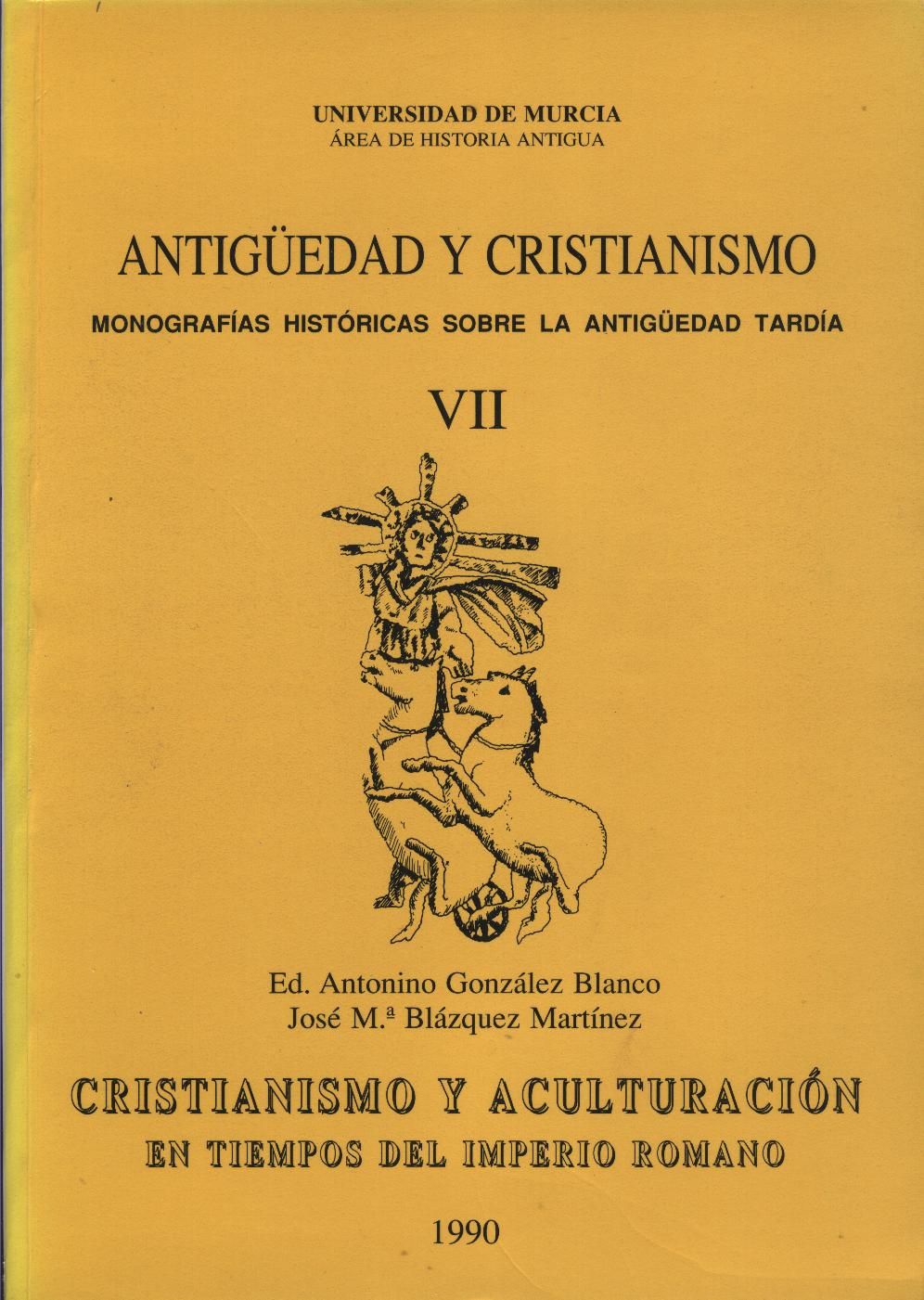
La aculturación como modelo de transición social: los mecanismos de la cristianización
Resumo
This communication intends to present a theoretical model which can be applied to the process of Christianization in the Iberian Peninsula. We began with the study of the processes of aculturation: external processes (changes, violent or not, of the social groups in power) and an internal process (the rise of a new social class to power). We believe that Christianity is the principal agent in the process of aculturation, and it could be considered as an internal process, except in certain regions in the North of the Peninsula where it presents an external character due to the prevalence of certain modes of pre-Roman production, and as a consequence the process of Christianization en these regions is not as rapid, nor as pacific, as once believed.
Downloads
-
Resumo394
-
PDF (Español (España))293
1. Los autores ceden de forma no exclusiva a la revista los derechos de explotación (reproducción, distribución, comunicación y transformación).
2. Las obras que se publican en esta revista están sujetas a la licencia Attribution-ShareAlike 4.0 International (CC By SA 4.0). Por lo que se pueden copiar, usar, difundir, transmitir y exponer públicamente, siempre que:
i) se cite la autoría y la fuente original de su publicación (revista, editorial y URL de la obra), permitiendo así su reconocimiento.
ii) se permite remezclar, transfromar o crear a partir del material mientras se mantenga la misma licencia del original.
Nota: Los artículos anteriores a 2022 muestran incorrectamente la licencia CC by SA en la página de resumen. Están bajo una licencia CC by NC ND tal y como se incluye en los pdfs de los artículos. Los artículos publicados en 2022 y después están bajo la licencia CC by SA.

3. Condiciones de auto-archivo. Se permite y se anima a los autores a difundir electrónicamente las versiones pre-print (versión antes de ser evaluada) y/o post-print (versión evaluada y aceptada para su publicación) de sus obras antes de su publicación, ya que favorece su circulación y difusión más temprana y con ello un posible aumento en su citación y alcance entre la comunidad académica. Color RoMEO: verde.